SAAS
Landing Page
Design
ScaleEV - Smart EV Charging Companion
seamless journey for EV owners: from locating chargers, checking availability, and navigating routes — to managing payments and tracking charging history.
How We Started
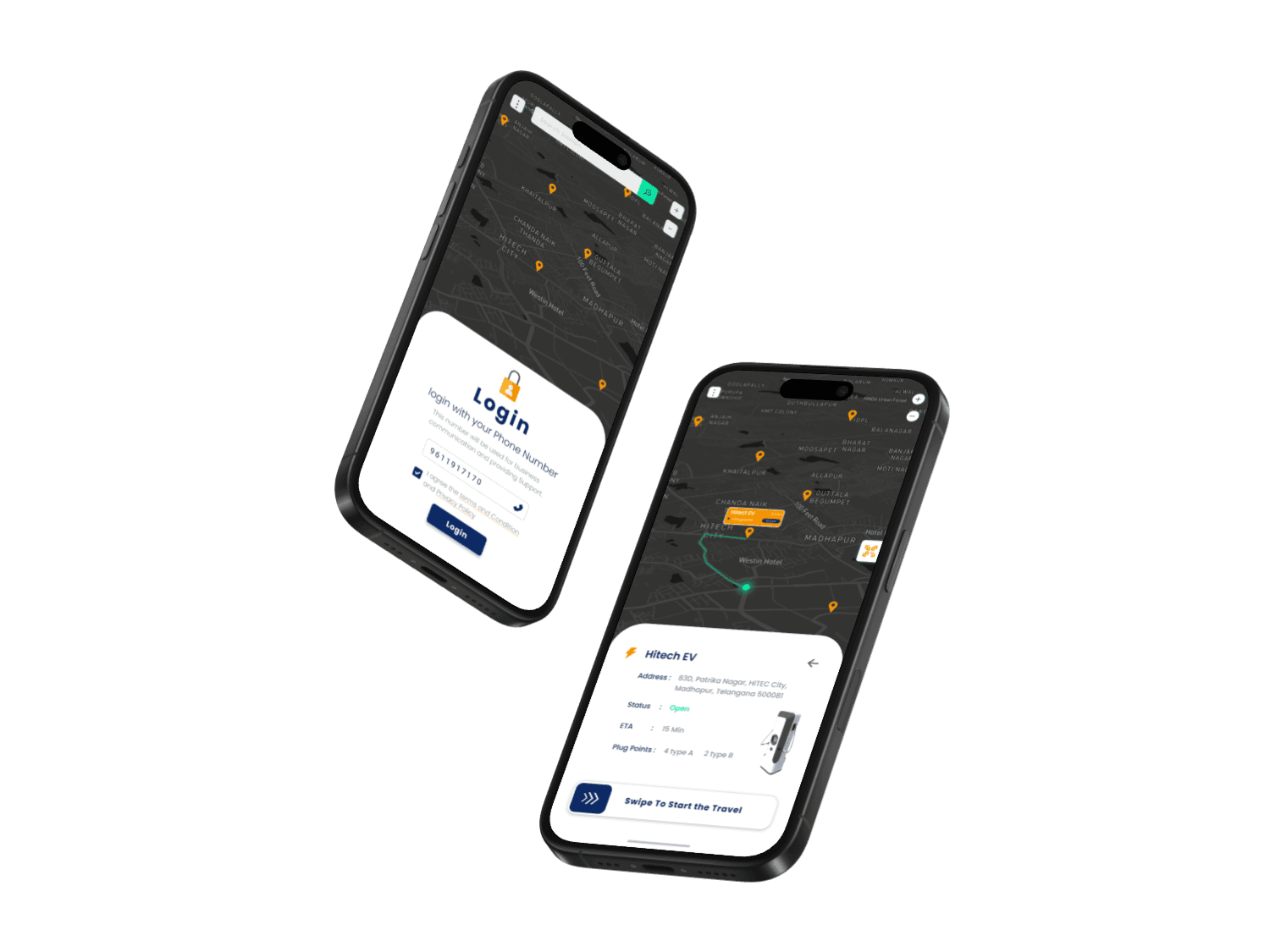
With the rise of electric vehicles, one of the biggest challenges drivers face is finding reliable, nearby charging stations on the go. The idea behind EVGo was to design a modern, intuitive mobile app that not only helps users locate chargers in real-time but also enhances the entire charging experience.
The goal was to create a seamless journey for EV owners: from locating chargers, checking availability, and navigating routes — to managing payments and tracking charging history.
Project Structure
1. Project Overview
Objective: Design a user-friendly mobile application to simplify charging station discovery, access, and management for EV owners.
Target Audience: EV drivers, commuters, and eco-conscious users looking for convenience and reliability.
Key Goals:
Locate nearest available charging stations in real-time.
Offer navigation & route optimization to chargers.
Enable on-the-go charging session management (start, stop, track progress).
Provide a frictionless payment system.
Build trust with transparent data (availability, pricing, speed, connector type).
2. Research & Discovery
User Research:
Surveyed EV owners to identify charging pain points.
Conducted ride-along testing with EV drivers to observe challenges.
Competitive Analysis:
Studied existing apps like PlugShare, ChargePoint, and Tesla.
Identified gaps: poor UI, inconsistent data, lack of intuitive journey planning.
Key Insights:
Users prioritize real-time availability and charger compatibility.
Ease of use on-the-go is critical — interactions must be quick, simple, and safe while driving.
Loyalty features like favorites, history, and discounts increase retention.
3. Information Architecture (IA)
Sitemap:
Home (Map View of Nearby Chargers)
Station Details (pricing, connector type, availability, photos)
Route Planner
Charging Session Management
Wallet & Payments
Profile & Settings
User Flow:
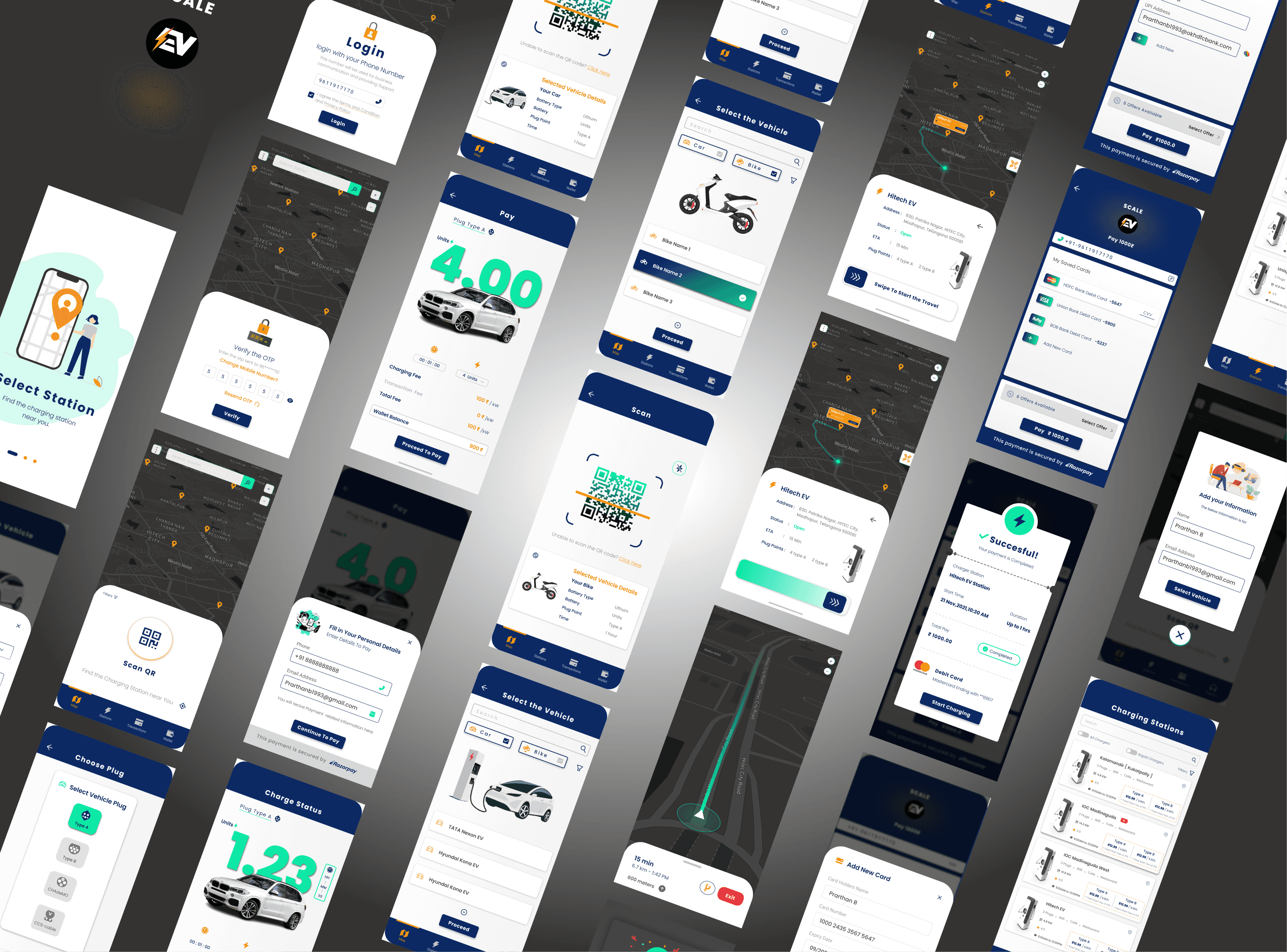
Open app → Auto-detect nearest chargers → Navigate to preferred station → Start charging → Pay → Track history.
4. Visual Design & High-Fidelity Prototypes
Design System:
Colors: Eco-friendly palette (greens & blues) with contrast for accessibility.
Typography: Bold, legible sans-serif fonts for clarity on the road.
Icons: Minimal, recognizable for quick interpretation while driving.
High-Fidelity Prototypes:
Map-first design with clear charger icons.
Real-time availability indicators (green = available, red = busy).
Quick access floating button for route planning.
Interactive Elements:
Swipe actions to start/end sessions.
Animated progress bars for charging.
Tap-to-pay wallet integration.
Key Features
Nearest Charger Finder: Real-time map showing availability, pricing, speed, and compatibility.
Smart Route Planning: Navigate to the most efficient charging point with traffic and battery status in mind.
On-the-Go Session Control: Start, pause, or stop charging directly from the app.
Wallet & Payments: Integrated payments with saved cards, digital wallets, or credits.
History & Favorites: Track past sessions, costs, and save favorite stations.
Key Takeaways (My Perspective as a Product Designer)
User-Centered Approach: Designed for real-world EV driver needs — speed, safety, and reliability.
Attention to Detail: Prioritized legibility and quick interactions for use in driving contexts.
Collaboration: Worked with developers, map API providers, and EV charging partners for accuracy.
Problem-Solving: Turned the fragmented, often stressful charging experience into a smooth, app-powered journey.